













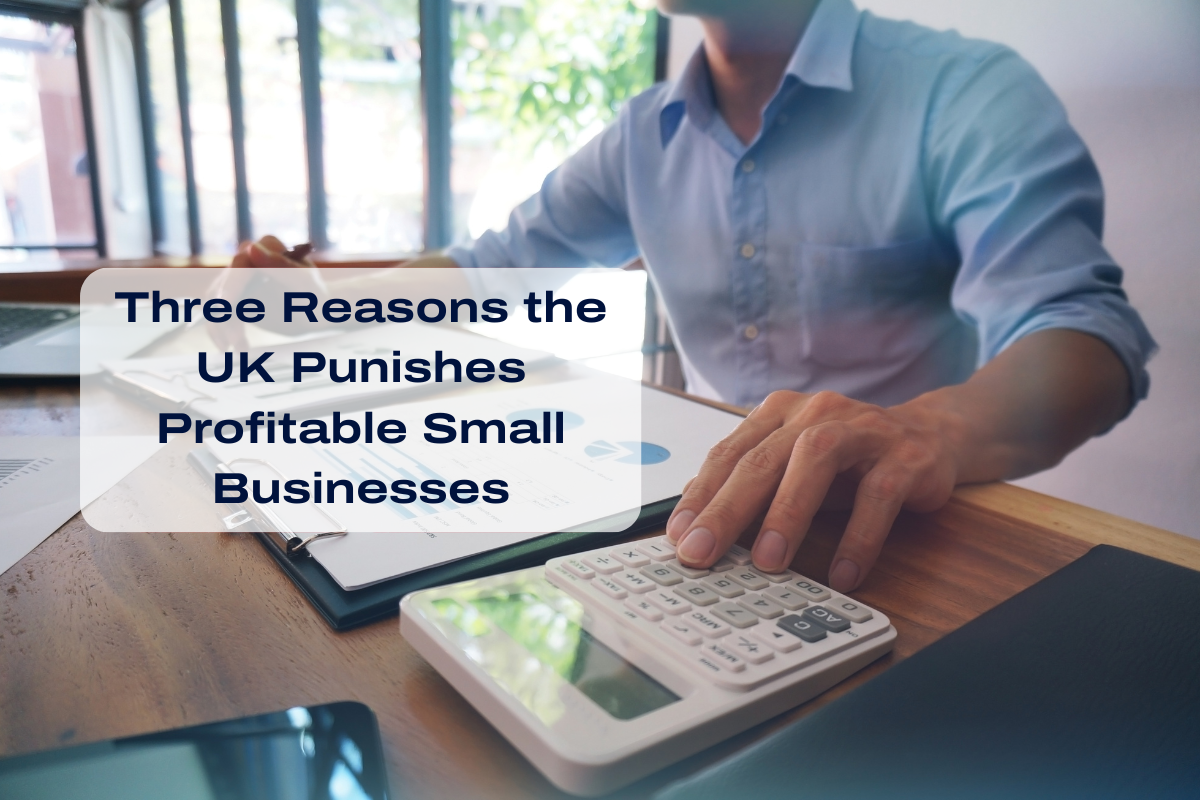
If you run an SME, you sometimes wonder if the government is on the same side as you. It sees that profitability is a reason to be punished rather than celebrated. As soon as your business becomes successful, the rules seem to change. Reliefs fade away, thresholds become tougher, and costs rise. It makes you wonder: wasn’t growth supposed to be the goal? This is not a political argument, but an analysis of the underlying incentives. The current UK tax system tends to reward businesses that remain small, while making expansion and increased profitability more challenging. Here are three main reasons why this issue matters. 1) The jump from 19% to 26.5%. a marginal rate that feels like a trap Most small company owners know the headline Corporation Tax rates: 19% on profits under £50,000 and 25% on profits over £250,000 (with marginal relief in between). But what really hurts is what happens in the middle. Between £50,000 and £250,000, the effective marginal Corporation Tax rate is 26.5%. Put simply, every extra £1 of profit in this range can be taxed at 26.5p. This is higher than the main rate of 25%. The reason is that the system takes back the benefit of the 19% small profits rate as your profits increase SME owners dislike this because it doesn’t feel like a smooth transition. Instead, it feels like entering a growth zone where the reward for extra profit is less than expected. A simple example: Company A makes £50,000 profit: taxed at 19%. Company B makes £80,000 profit: that extra £30,000 sits in the marginal band and is effectively taxed at 26.5%. Yes, it’s complicated! As soon as your business grows beyond the small category, the system takes a larger share of each extra pound you earn. Some might say you’re still better off overall, but that misses the point. Tax policy doesn’t just collect money; it also influences behaviour. This setup encourages business owners to keep profits below certain levels, hold back growth, delay invoicing, reinvest only when necessary, and avoid too much success in a single year. 2) Allowances that shrink as your business grows In the UK, as you earn more, you’re not just taxed at higher rates. Helpful allowances also quietly shrink as your business grows. Here are two examples that small business owners notice right away: Dividend allowance quietly eroded Although not primarily designed to support owners of businesses, the dividend allowance was a simplification measure for people with small amounts of dividend income (often retirees or casual investors), so they wouldn’t need to complete a tax return just because they held shares. The allowance has been cut from £5,000 to just £500 over a few years, which is a 90% reduction. That’s classic stealth taxation: no headline rate rise, just a shrinking tax-free slice that pulls more people into paying tax. For company directors who rely on dividends as part of normal remuneration, today’s allowance is effectively negligible. Exit relief has become more limited. Entrepreneurs’ Relief (now BADR - Business Asset Disposal Relief) was dramatically reduced from a £10m lifetime limit to £1m in 2020. The CGT rate under BADR increased to 14% for disposals from 6 April 2025 (it was 10% before) and goes up again to 18% in April 2026. It is effectively a stealth tax. If you’re building a business with plans to sell it, step back, or fund something new in the future, these changes are important. The system’s message is clear: you can start a business, but if you become too successful, the incentives become less generous. This doesn’t encourage a pro-growth culture. 3) Employer NIC rises Hiring in the UK has always been costly when you include extra expenses. Recent changes to employer National Insurance have made this even clearer. From 6 April 2025: Employer Class 1 NIC rate increased from 13.8% to 15% Secondary Threshold reduced from £9,100 to £5,000 One positive change was the Employment Allowance has increased from £5,000 to £10,500 and the old £100,000 eligibility restriction was removed. This does reduce NIC bills, but not enough to match the punitive measures announced. The usual message is that those who can afford it should pay more. In reality, employer NIC is a tax on jobs. When it increases, it affects hiring decisions directly, not just large companies. A simple NIC example: one employee on £25,000 (roughly minimum wage) Before the changes (2024–25 rules) Employer NIC rate: 13.8% Employer NIC threshold: £9,100 Employer NIC is paid on earnings above £9,100. £25,000 – £9,100 = £15,900 Employer NIC at 13.8% = £2,194 Total cost to employer: Salary: £25,000 Employer NIC: £2,194 Total: £27,194 After the changes (from April 2025) Employer NIC rate: 15% Employer NIC threshold: £5,000 Employer NIC now starts much earlier. £25,000 – £5,000 = £20,000 Employer NIC at 15% = £3,000 Total cost to employer: Salary: £25,000 Employer NIC: £3,000 Total: £28,000 The difference Extra cost per employee: ~£806 per year That’s before pension contributions, training, software, equipment, sick cover or any pay rises. While the Employment Allowance has increased to £10,500, once a business has several employees, that allowance is quickly absorbed. After that point, every additional hire permanently costs more under the new system. So, if you have no employees, you could be missing out on this employment allowance. Directors aren’t exempt either This doesn’t just affect growing teams. It also hits single-director companies where the director pays themselves a modest salary and takes the rest as dividends. A common structure is a director salary of £ 1,045 per month (£12,540 a year), set around the personal allowance. Under the old rules, this often resulted in little or no employer NIC. From April 2025, that changes. Employer NIC now starts above £5,000 , not £9,100 Employer NIC rate rises to 15% For a sole director on £12,540: £12,540 – £5,000 = £7,540 subject to employer NIC Employer NIC at 15% = ~£1,130 per year With no other employees, many directors cannot benefit meaningfully from the Employment Allowance, so this becomes a straight additional cost for simply running a company. Think about hiring another employee so you can claim this employment allowance. So, what happens? fewer hires slower wage growth more reliance on contractors investment delayed automation suddenly looks “more affordable” than people This isn’t because business owners are at fault. It’s because the financial realities force them to make tough choices. The old-school truth: it’s easier to stay small When you look at all three issues together, a pattern emerges: grow profits past £50k, and your marginal Corporation Tax rate jumps to 26.5% pay yourself and the “allowances” feel more like admin than support hire people, and the costs keep rising This is why many SME owners feel that the UK punishes profitable small businesses. It’s not due to one big policy, but a series of rules that make it harder to be ambitious. Knowing all the reliefs and rules available can make it more affordable to grow, but need a good accountant in your corner. Is this new, or have we always been like this? There have been periods of genuine support for small businesses. For instance, Entrepreneurs’ Relief was introduced in 2008 to incentivise entrepreneurialism and business growth, before being later restricted. And for a long stretch (2017-2022), Corporation Tax was effectively a flat 19% for most companies, which felt simpler (it was even more confusing before 2017) and more predictable than today’s banded system. The UK has supported small businesses in the past. But over time, the system has become more focused on clawbacks, often confusing fairness with unnecessary obstacles. How do other countries make growth feel easier? Many countries design policies to make reinvestment and scaling feel more natural. Ireland taxes trading income at 12.5% Corporation Tax Estonia has a well-known system where retained and reinvested profits are taxed at 0%, and tax is mainly due when profits are distributed. Across the OECD, statutory corporate tax rates fell over the long term (2000 to 2019) and have since stabilised, reflecting an international focus on competitiveness. These examples aren’t perfect solutions for the UK, but they show a different approach: making reinvestment and growth the standard, not something special you have to work around. So, what should be done? If the UK truly wants more productive and growing SMEs, the government needs to send clearer signals. Right now, the message is: You can start a business. But if you get profitable and start hiring at pace, we’re going to take more, remove more, and make it all a bit more complicated. That’s why so many talented founders end up aiming lower than they could. It’s time to think bigger. It’s also time to think smarter. If you want to find out how to be more tax efficient, please get in touch. Frequently Asked Questions (FAQs) on Tax and Profitability for UK Small Businesses 1. Why does Corporation Tax jump to 26.5% for some small businesses? The 26.5% marginal Corporation Tax rate applies to profits between £50,000 and £250,000 due to the phased withdrawal of the 19% small profits rate. This creates an effective tax “trap” where each extra £1 of profit in that band is taxed more heavily than profits above £250,000. 2. What is marginal relief and how does it work? Marginal relief gradually removes the benefit of the 19% rate as your profits increase. It’s designed to smooth the transition, but in practice it creates a steep effective tax rate of 26.5% on profits within the band—making growth feel penalised. 3. How have dividend allowances changed? The dividend allowance has been reduced from £5,000 in 2016/17 to just £500 from April 2024. This means most dividends taken by directors are now taxable, even at relatively low levels, significantly increasing personal tax bills. 4. What is BADR and how has it changed? Business Asset Disposal Relief (formerly Entrepreneurs’ Relief) now applies to a much smaller lifetime limit (£1m, down from £10m) and the Capital Gains Tax rate is rising to 18% by April 2026. These changes reduce the tax efficiency of exiting or selling a business. 5. How are employer National Insurance contributions changing in 2025? From April 2025, the employer NIC rate rises to 15%, and the threshold drops to £5,000. While the Employment Allowance increases to £10,500, these changes increase the cost of hiring and maintaining payroll—even for minimum-wage employees. 6. Does this affect sole director companies too? Yes. Directors who pay themselves a modest salary (e.g. £12,540) will now face employer NIC charges starting from £5,000. For many single-director companies, this means an extra £1,130 in tax per year without any real benefit in return. 7. Why does it feel like it’s easier to stay small? The UK tax system currently removes or reduces reliefs as businesses grow. From higher marginal tax bands to more complex allowances and rising employer costs, these rules create a perception—and often a reality—that scaling is penalised rather than encouraged. 8. What can I do to reduce the impact of these tax changes? Smart planning is key. Understanding the thresholds, making use of available allowances, and structuring your remuneration, reinvestment, and hiring strategies carefully can all reduce your tax burden. The right accountant can help you plan for growth, not punish you for it.
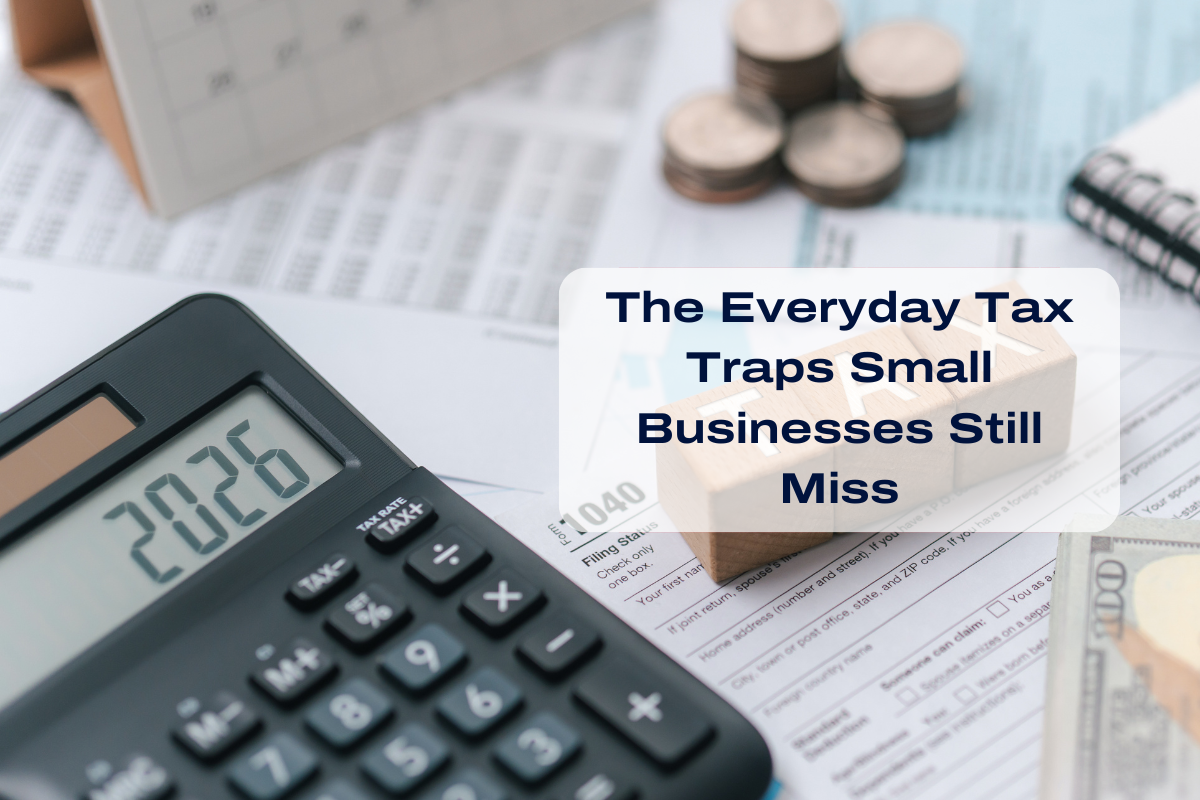
Most small business owners want to get their taxes right. Many are careful and want to do things properly. The trouble is that the most common tax mistakes are rarely dramatic or obvious. They build up quietly in daily business life until a confusing or frustrating bill arrives. These everyday tax traps are easy to miss. Tax declarations can be based simply on what you ‘got away’ with last year, advice from a friend, or just what feels right. While these mistakes are not intentional, they can still cost you. Here are some of the most common tax traps for small businesses, and how you can spot them before they cause problems. Mixing business and personal money This is one of the biggest and most common issues, especially for sole traders and small company directors. When personal and business finances mix, it gets hard to tell what counts as an expense, what is income, and what is just money being moved. Using a personal card for business purchases might seem harmless, but over time it leads to missing records, lost expenses, and confusion at tax time. It also makes it easier to claim things you shouldn’t, just because the boundaries are unclear. Having a separate business account and card isn’t just for appearances. It helps protect you from mistakes that can quickly add up. Claiming “obvious” expenses that are not actually allowable Many business owners think that if something helps them do their job, it must be tax-deductible. But tax rules don’t always follow common sense. Clothing is a good example. Unless it’s protective or a uniform for work, everyday clothes aren’t an allowable expense, even if you only wear them for work. The same rule applies to many home costs, meals, and travel that isn’t strictly for business. Most people don’t make these claims on purpose. The rules are just more detailed than many expect. Over time, incorrect claims can add up and increase the risk of a challenge from HM Revenue & Customs, leading to a conversation you’d rather avoid. Forgetting about tax on “small” or irregular income Side income, one-off projects, referral fees, cash jobs, or online sales often get missed because they seem small. But for tax purposes, all income counts, no matter how irregular or informal it feels. This trap is more common now as businesses offer more services. You might have a main service plus digital products, workshops, affiliate links, or consulting. If you don’t track these streams, they can easily be missed. This problem often only shows up when you review your bank accounts or notice the numbers don’t add up. By then, figuring out what happened months ago can be stressful and take a lot of time. Missing VAT issues before it is too late VAT often surprises people because it creeps up slowly. Businesses reach the threshold bit by bit, and by the time they cross it, it might be too late to register properly. Some business owners also get confused about what counts towards VAT turnover, or think that being paid late delays the need to register. It doesn’t. VAT is based on invoices you issue, not when you get paid, unless you’re on a special scheme. If you register late, you might have to pay VAT yourself on past sales. This is painful and can be avoided. Not planning for tax, just reacting to it One of the worst habits is only thinking about tax when a deadline is near. If you only react to tax, it always feels like a problem. If you plan for it, tax becomes a useful tool. Without regular reviews, business owners miss chances to set money aside, adjust pay, and avoid surprises. They also lose out on ways to organise things better, just because no one is planning ahead. Good tax planning doesn’t mean complicated schemes or loopholes. You just need to assess what’s ahead and prepare calmly. Assuming software will fix everything Accounting software is great, but it can’t replace your own understanding. It only works with the information you give it, and it can easily put things in the wrong category if it’s set up or used incorrectly. If you rely only on automation and don’t check reports or ask questions, mistakes can repeat every month. By the time you prepare your accounts, those mistakes are harder to fix. Technology should help you make decisions, not make them for you. Leaving things too late to ask for help Maybe the biggest trap is waiting until something goes wrong before asking for help. Many small business owners worry that talking to an accountant will be costly, judgmental, or overwhelming. In reality, early conversations are usually the easiest and most helpful. A quick review at the right time can save you months of stress. The longer you wait, the fewer options you’ll have. Avoiding the traps starts with awareness Most tax problems don’t happen because of carelessness. They happen because people are busy, make assumptions, or don’t check things regularly. The good news is, once you know where the traps are, they’re much easier to avoid. Keeping your finances separate, maintaining accurate records, reviewing things regularly, and having honest talks about your business all help a lot. Tax shouldn’t always feel stressful. With the right support and some planning, it becomes just another part of running a healthy business. If you see yourself in any of these situations, it’s not a failure. It just means your business has grown, changed, or become more complex. And that’s usually a good thing. The other good thing is that it is the right time to get in touch with Collective Concepts Accounting. We are here to help! Frequently Asked Questions (FAQs) on Small Business Tax Mistakes 1. What are the most common tax mistakes small businesses make? The most common tax traps include mixing personal and business finances, claiming non-allowable expenses, missing small or irregular income, crossing the VAT threshold without realising, relying too much on software, and leaving it too late to get advice. 2. Why is it a problem to mix personal and business money? When personal and business finances get muddled, it becomes difficult to track what’s actually business-related. This can lead to missed deductions, incorrect tax filings, and confusion at year-end. A separate business account is a simple fix that prevents a lot of problems. 3. Can I claim work clothes and meals as business expenses? Not always. HMRC has strict rules: clothing must be protective or a uniform to be deductible, and meals must be wholly and exclusively for business. Everyday clothes and personal meals usually don’t qualify, even if you wear or eat them while working. 4. Do I have to report all income, even small or one-off jobs? Yes. All income counts for tax purposes, even side gigs, one-off projects, referral fees or online sales. These can be easy to overlook, so it’s important to track all income streams consistently throughout the year. 5. How do I know when I need to register for VAT? You must register once your VAT-taxable turnover goes over the threshold (currently £90,000). VAT is based on issued invoices—not payment dates—unless you're on a specific scheme. Waiting too long can mean paying VAT out of your own pocket. 6. Isn’t accounting software enough to manage my taxes? Software is a helpful tool, but it’s only as good as the data you enter. Mis-categorised transactions or unchecked automation can lead to errors. Software should support your decisions, not replace regular reviews and professional advice. 7. When should I speak to an accountant? Ideally, before you hit a problem. Early advice can save you time, money and stress. Whether your business is growing, changing, or just feeling a bit more complex, a proactive check-in is always worth it.
Most company directors are handed a set of accounts once a year, skim a few numbers, nod politely and move on. They might check if there is a profit, look at the tax number, and hope the bank balance seems okay. After that, the accounts are filed away until next year. The truth is that many directors do not really understand their accounts. It is not because they cannot, but because no one has shown them how to read the numbers in a way that helps them run their business. Financial advisers read accounts differently. They do not just check for compliance. They look for signals, patterns, warnings, and opportunities. Once you know what to look for, your accounts feel less intimidating and much more useful. Why accounts feel confusing in the first place For most directors, accounts are given as a finished product, not as a tool to use. They are full of technical terms, old numbers, and formatting that seems made for accountants, not business owners. Also, accounts look back at what has already happened. They do not tell you what to do next. Without context or explanation, it is hard to link those numbers to real decisions like pricing, hiring, or investing. This makes many directors lose interest. They rely on gut feeling, checking the bank balance, or just a sense of whether things are going well. The accounts are there, but they are not really used. The mindset shift: from compliance to insight Financial advisers do not read accounts to tick a box. They read them to understand the business's story. Every number is a clue. A profit margin can show if your pricing is strong or weak. A higher debtor balance can mean cashflow problems. Rising overheads might show growth, inefficiency, or both. If you look at your accounts with curiosity instead of fear, they become much easier to understand. You stop asking if the numbers are right and start asking what they mean. Start with profit, but don’t stop there Most directors look straight at the bottom line. Profit is important, but by itself, it does not tell you much. A good profit can hide cashflow issues, overworked directors, or prices that cannot last. On the other hand, a small profit might be fine if the business is reinvesting or growing on purpose. Look at profit in context. Compare it to past years and to your turnover. Ask if it matches the effort you have put in. Financial advisers always check if profit is working well for the people running the business. Understand the difference between profit and cash A big source of confusion is the gap between profit and cash. You can show a profit on paper but still struggle in real life. Accounts are made using the accruals method. This means income and expenses are recorded when they happen, not when the money is received or paid. If customers pay late or you spend a lot upfront, your cash can fall behind your profit. Advisers watch debtors, creditors, and bank balances as well as profit. They know cash is what keeps the business running every day, no matter what the main numbers show. Read the balance sheet, not just the profit and loss Many directors skip the balance sheet. This is a mistake. The balance sheet shows your business’s financial position at a certain time. It tells you what the business owns, what it owes, and what is left. Here you can see retained profits, director loans, and long-term debts. A financial adviser checks if the business is getting stronger or weaker over time. Growing reserves, manageable debts, and a healthy director loan are signs of stability. If you ignore this page, you miss some of the most important information in your accounts. Look for trends, not isolated numbers One year’s numbers rarely tell the whole story. Advisers always look for trends. Is your turnover growing but profit shrinking? That could mean pricing pressure or higher costs. Are overheads rising faster than revenue? That might show inefficiency or growing pains. Is your tax bill going up faster than expected? That could mean you need better planning. When you compare your accounts year after year, patterns appear. These patterns are much more useful than any single number on its own. Pay attention to director pay and rewards Many directors focus on what stays in the business and forget to think about what the business gives back to them personally. Advisers look at salaries, dividends, and benefits. They ask if the director is being paid fairly and in a tax-efficient way. They also check if retained profits have a purpose or are just building up with no plan. Your accounts should help your life, not just your business. If they do not, it is time to make a change. Use your accounts to inform decisions, not justify them A common mistake is using accounts to explain decisions after they are made. Financial advisers do the opposite. They use the numbers to guide choices before making a decision. Can the business afford to hire? What sales level justifies a new cost? How much can you safely take out without causing problems? When you review and understand your accounts regularly, they become a tool for making decisions, not just a record of the past. You don’t need to be an expert to be informed Understanding your accounts does not mean learning all the accounting rules. The trick is knowing what questions to ask and what the key numbers mean for you. Most directors are more capable than they think. They just have not had the numbers explained in plain language that connects to their real priorities. Once you bridge that gap, your confidence grows quickly. Reading your accounts like an adviser changes everything When directors really understand their accounts, conversations change. Planning becomes proactive, not reactive. Tax feels manageable, not scary. Decisions are made with clarity, not guesswork. Your accounts already have the information you need. The key is in how you read them. If you start using your accounts as a tool for insight instead of just for compliance, you will see your business much more clearly. That is exactly how a financial adviser would want you to read them. If you would like help understanding what your accounts really mean for your business, please book a call. Frequently Asked Questions (FAQs) on Understanding Your Company Account s 1. How can I understand my company accounts if I’m not financially trained? You don’t need to be an accountant to understand your accounts - you just need the key concepts explained in plain English. Focus on big-picture items like profit, cash flow, and trends year over year. A good adviser will help you translate the numbers into real-life decisions. 2. What’s the difference between profit and cash? Profit is what’s left when income exceeds expenses on paper. Cash is the actual money in your bank. Because of things like unpaid invoices and upfront costs, your profit can look healthy even if your bank balance doesn’t. That’s why advisers track both closely. 3. Why should I read the balance sheet? Isn’t the profit and loss report enough? The profit and loss (P&L) tells you what happened over time, but the balance sheet shows your financial position at a point in time. It tells you what you own, what you owe, and how much you’ve retained. Skipping it means missing vital context. 4. How often should I review my accounts? Ideally, review your accounts at least quarterly - not just at year-end. Regular check-ins help you spot patterns early, avoid surprises, and make better decisions about hiring, investment, or paying yourself. 5. What do financial advisers look for in business accounts? Advisers look beyond the numbers. They assess whether your profits are sustainable, if cash flow is healthy, how director rewards are structured, and whether your business is moving in the right direction over time.
UK business rates are outdated & unfair. Learn how this impacts businesses. Contact us for expert accounting services!